Event newsletter marketing: lower sending costs and track ticket revenue
TicketTool marketing feature for organizersNewsletters are one of the most valuable sales channels for event organizers. A well-timed email to the right audience can sell more tickets than a social media post that disappears after a few hours. But classic newsletter platforms become expensive when the audience grows, especially when tens of thousands of ticket buyers, visitors and prospects are stored in the account.
TicketTool brings newsletter sending into the ticketing workflow: organizers can prepare event newsletters, insert event data automatically, send through AWS SES and then see which campaign generated clicks, orders and revenue.
You can see an example of this kind of event newsletter later on this page: jump to the newsletter example.
Why we built newsletters directly into TicketTool
Several customers told us that external newsletter tools became hard to justify for large contact databases. With services such as Mailchimp, pricing often depends on the plan, contact count and selected features. When an organizer database grows to 30,000, 50,000 or more contacts, the monthly cost can rise before a new campaign has even been sent.
The bigger question is performance. Opens and clicks are useful, but organizers need to know which email actually sold tickets. A ticketing system has a clear advantage here because campaign links, events, orders and revenue can be connected in the same environment.
Want to connect newsletters with ticket sales?
We can show you how TicketTool combines event data, email sending and revenue reporting in one workflow.
Book a newsletter ticketing demoSending through AWS SES instead of expensive contact tiers
TicketTool uses Amazon Simple Email Service for sending. AWS SES is a pay-as-you-go email service, so organizers do not need a classic newsletter platform that charges mainly for storing a large contact list. At higher volumes, this can be much cheaper than many marketing tools.
The exact cost depends on region, sending volume and technical setup. As a practical reference from our own projects: even around 100,000 sent emails have stayed below 10 EUR in sending costs, with the most expensive cases we have seen at about 6 EUR. This difference matters most for organizers with large buyer databases because every stored contact does not automatically push the account into a more expensive monthly tier.
Create newsletters from existing event data
The everyday workflow is simpler because the important information already exists in TicketTool. Title, date, venue, description, prices, ticket link and event image do not need to be copied again and again. The team selects an event and can prepare an email faster.
This is especially useful for concerts, clubs, theatres, festivals and recurring event series. When new events are promoted every week, a direct workflow saves a lot of manual work.
Segment audiences by city, genre and purchase history
Because TicketTool knows which visitors bought tickets for which events, newsletters can be targeted much more precisely. Organizers can contact buyers from a specific city, select fans of a certain genre or reach people who attended a similar concert series before.
This is very different from sending one broad email to the entire database. A targeted campaign reaches people for whom the new event is actually relevant. That can improve click rates and sales while reducing unnecessary emails and unsubscribes.
Trackable links for ticket revenue
TicketTool can prepare newsletter links so that sales are attributed to a campaign. Organizers can see more than opens and clicks: which email promoted which event, how many orders came from it and how much revenue was generated.
This connection is essential for event marketing. A campaign with many opens only matters if it turns visitors into buyers. Revenue data makes it easier to decide which content, audiences and event dates perform.
Statistics for sending, delivery and opens
Through AWS SES and TicketTool reporting, technical and marketing metrics can be made visible: sent emails, delivery, opens, clicks and further events depending on the setup. The newsletter becomes part of sales analysis instead of a separate marketing island.
No gap between ticket shop and email marketing
When ticket sales and newsletters are separated, teams often duplicate data, build tracking links manually and compare reports that do not fully match. In TicketTool, buyer data, events, ticket links and orders are closer together. That makes campaigns faster and reporting easier to understand.
Which organizers benefit most?
The feature is especially useful for organizers with recurring events and a growing buyer database: clubs, concert promoters, cultural venues, dinner shows, theatres, festivals, museums, circuses and venues with their own audience. The larger the contact list and the more often new events are promoted, the more the lower sending cost and revenue tracking matter.
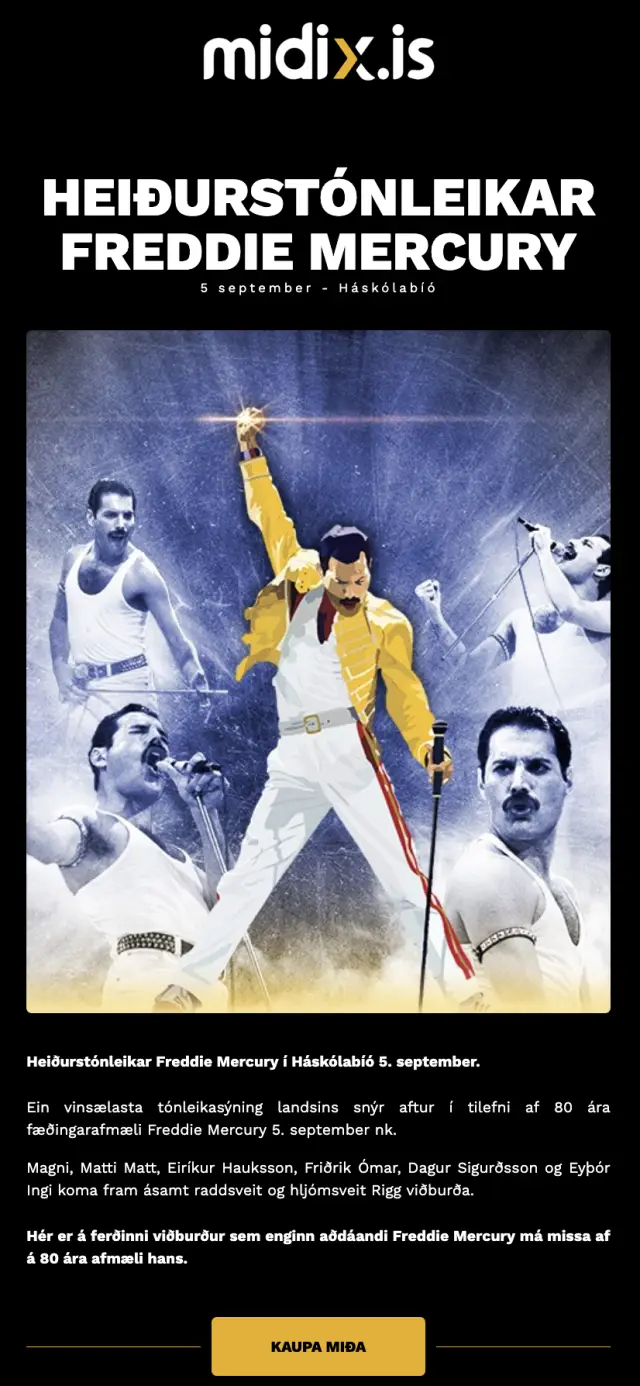
Example event newsletter
A newsletter can be built around one specific event: title, date, image, short description and ticket link. The team does not need to start from an empty email every time.
Newsletter marketing as part of event ticketing
For many organizers, TicketTool can fully replace external newsletter tools. Instead of spreading contacts, campaigns, event data and revenue reports across several systems, the newsletter runs inside the ticketing workflow. That makes it simpler, much cheaper and more effective because every campaign stays closer to the real goal: selling tickets.